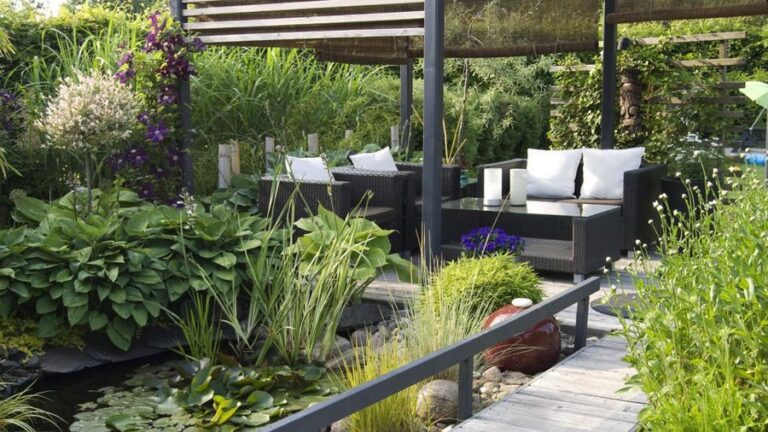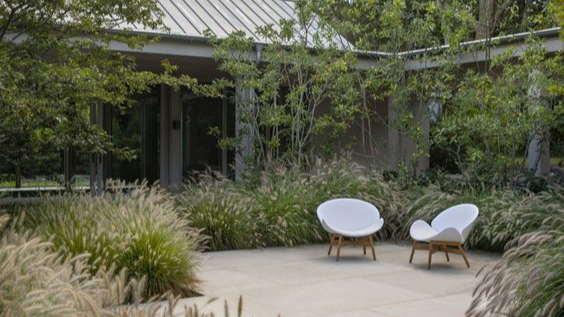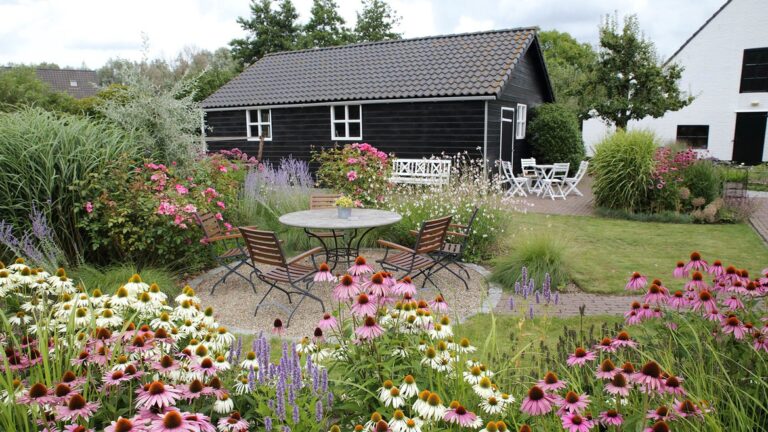

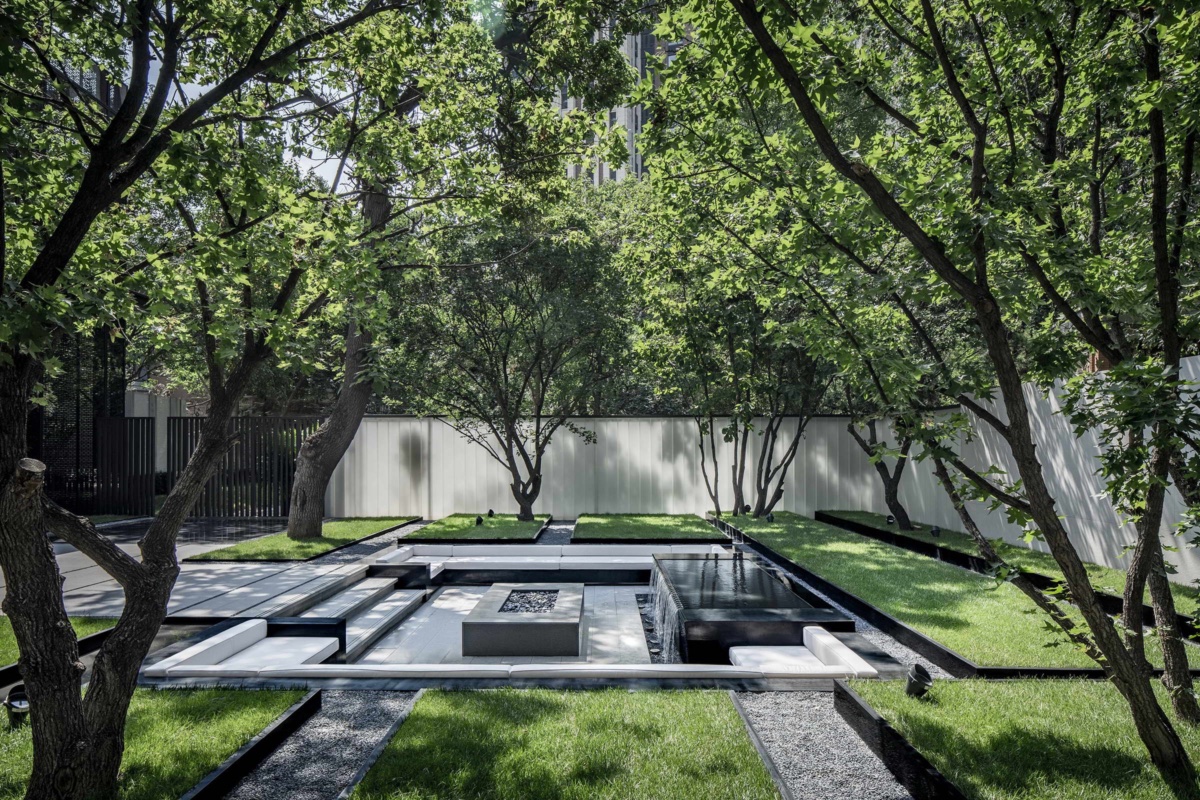
A modern style garden is designed based on clear geometry, proportion, and architectural logic. Horizontal and vertical lines, clean planes, and clearly defined spaces dominate the composition. Changes in elevation are often resolved through terraces, creating a structured yet visually light arrangement.
Plants function as compositional elements rather than decorative abundance. A restrained color palette is typically chosen, emphasizing form, texture, and contrast. Flowering plants are arranged in cohesive groups, maintaining clarity and rhythm within the overall structure.
This is a garden of order, clarity, and consistent architectural thinking. Bloom does not overwhelm the structure — it complements it.
It is important to note that modern style does not mean a sterile or “cold” courtyard. A clearly designed space allows for a calm, aesthetically refined, and comfortable landscape suited for everyday use.
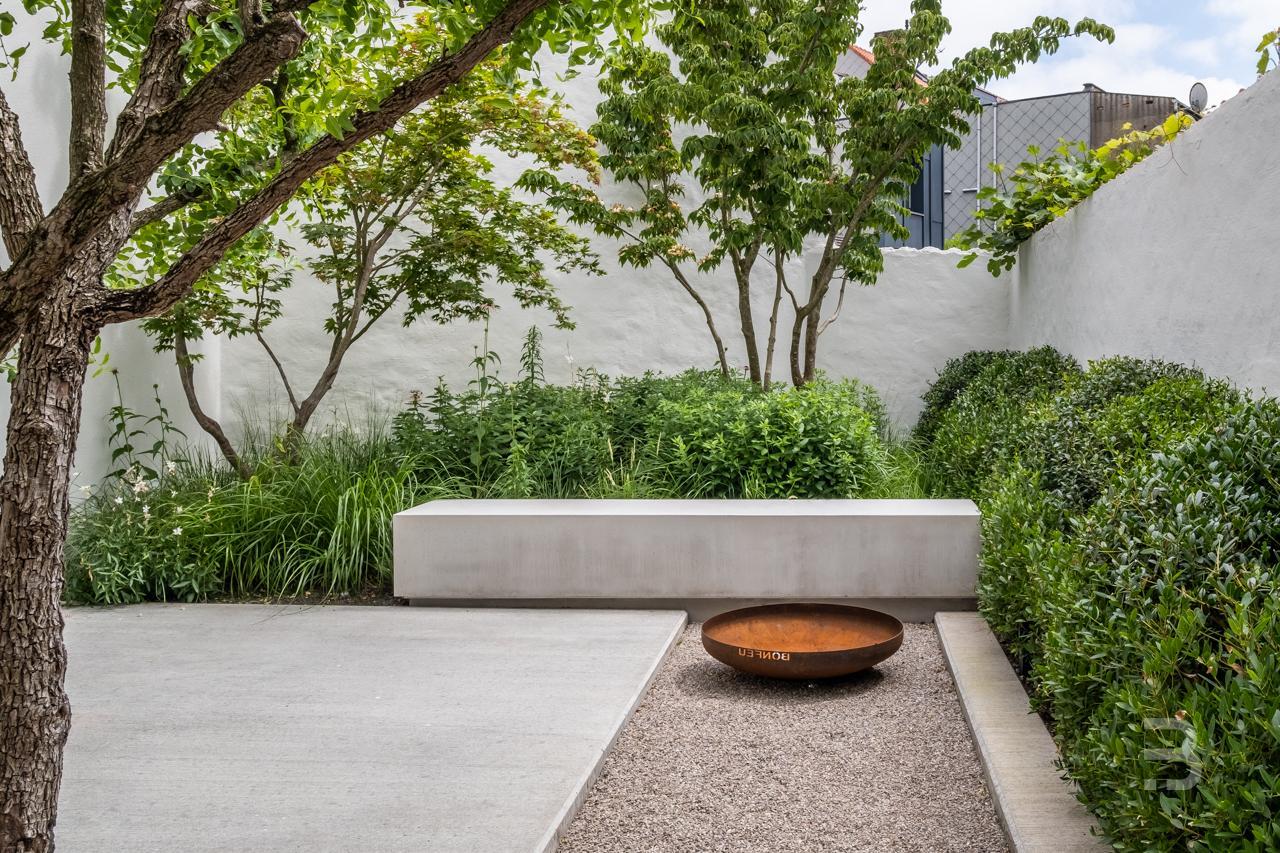
Characteristic Elements
• Geometric forms and a clear compositional structure.
• Terraced solutions for level changes.
• Symmetrical or asymmetrical reflecting pools.
• Sculptures and architectural accents.
• Accent lighting and thoughtfully planned lighting scenarios.
• Contemporary materials — concrete, glass, steel, finished stone.
• Minimalist, well-organized spatial layout.
Insight: In this style, the proportion between hardscape and planting is crucial. Excessive use of concrete or stone can create an overly rigid impression, while overly abundant planting may diminish the clarity characteristic of modern composition.
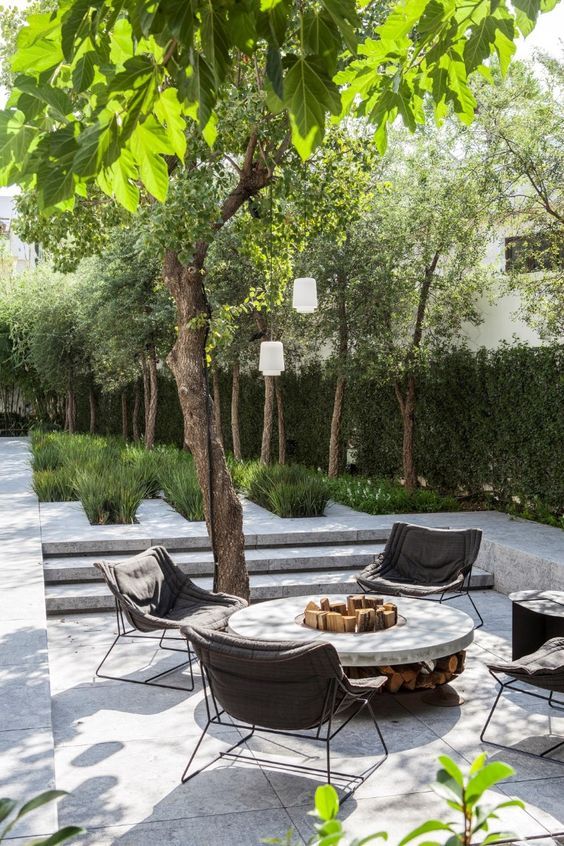
Characteristic Plants
• Structural evergreens — yews, boxwood, arborvitae (thuja), junipers.
• Clipped shrubs and hedges — privet, hornbeam, beech, dark-leaved ninebark, panicle hydrangeas.
• Ornamental grasses — feather reed grass (Calamagrostis), miscanthus, fountain grass (Pennisetum), sedges (Carex).
• Clearly shaped perennials — lavender, salvia, coneflower (Echinacea), yarrow, geranium (cranesbill).
• Vertical accents — columnar maples, birches, pines, upright ornamental apple trees or hornbeams.
A modern style garden is a composition of clear structure and calm aesthetics, where architecture and planting complement one another, and the space maintains its form and character throughout all seasons. Proportion and consistency are fundamental — each element has a defined place and purpose within the composition. Such a garden relies not on abundance, but on precision.