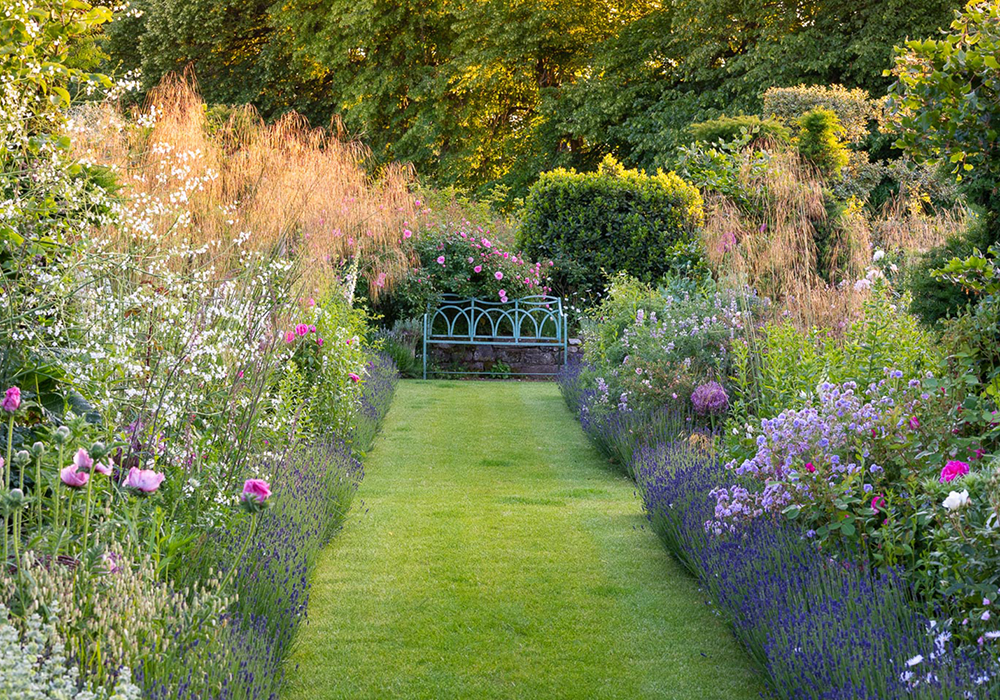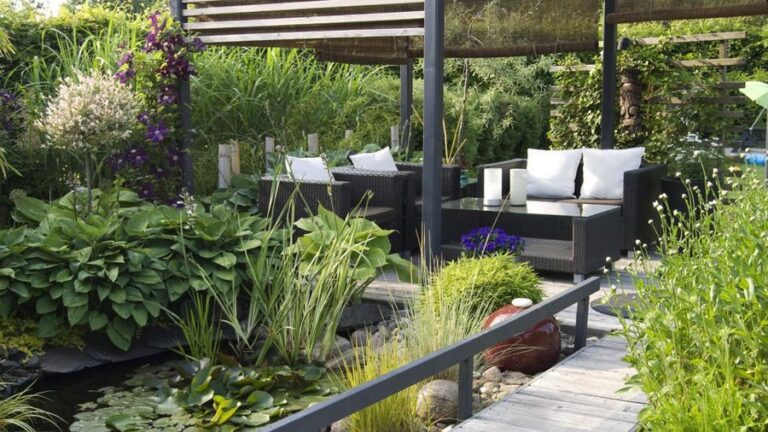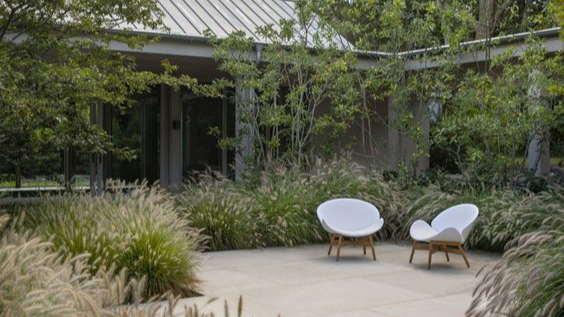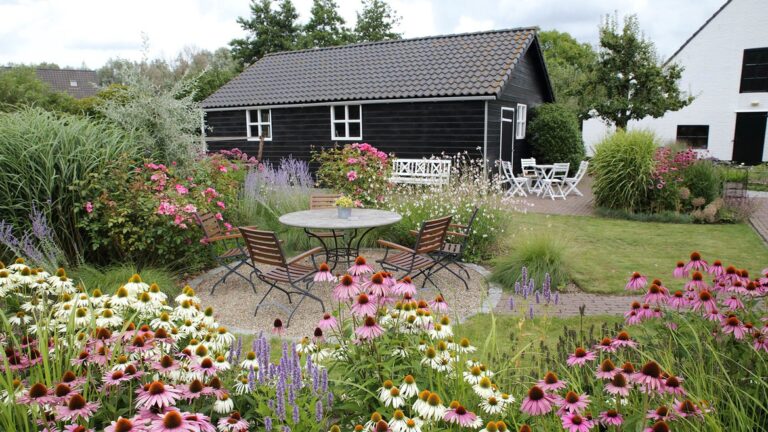

An English garden is an environment of natural forms, gentle transitions, and romantic atmosphere that emerged in opposition to strict symmetry and formal landscape traditions. Here, geometry is not the priority — mood is. Plants are composed as if they had arranged themselves naturally, and the space unfolds gradually, step by step.
Such a garden is designed as a system of separate “rooms”: one area for tea or morning coffee, another for reading, a third for conversations by an outdoor fireplace or water feature. It is not an open space revealed at a single glance, but a layered environment meant to be experienced.
The sense of naturalness is not accidental. An English garden requires a clear structure, carefully considered plant heights, and thoughtful seasonal planning. Only then does romance avoid turning into chaos.
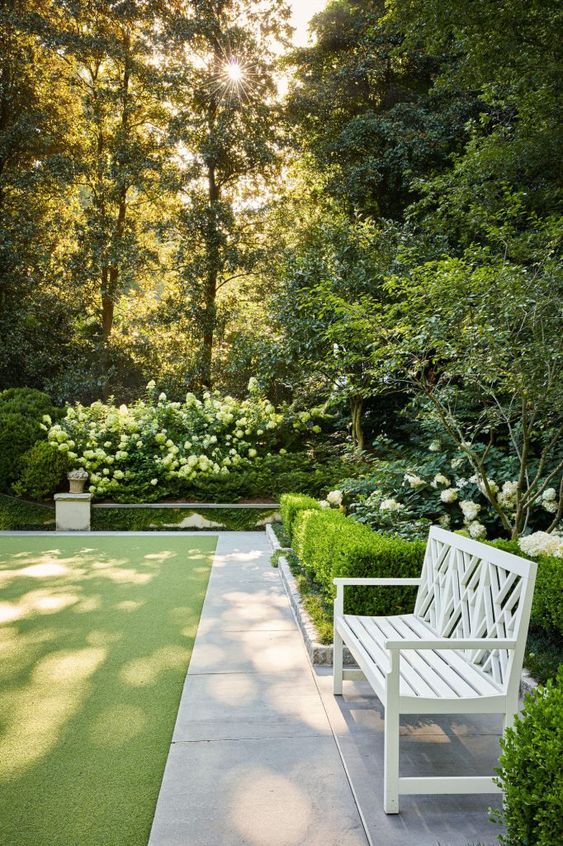
Characteristic Elements
• Free-form lawns and winding paths made of gravel, crushed stone, or natural stone.
• Brick or stone walls that frame the space and add subtle architectural character.
• Pergolas and arches covered with climbing plants, creating transitions between zones.
• Gates that open into separate garden “rooms.”
• Gazebos or rotundas — places for gathering and slow, relaxed presence.
• Decorative accents: classical sculptures, sundials, aged urns.
• Water features — natural ponds, fountains, or springs that provide a gentle soundscape.
• Cozy, slightly hidden seating areas that are discovered rather than immediately seen.
Insight: Even a small plot can capture the atmosphere of an English garden, but maintaining a sense of scale is essential — too many elements in a compact space can create a cluttered impression.
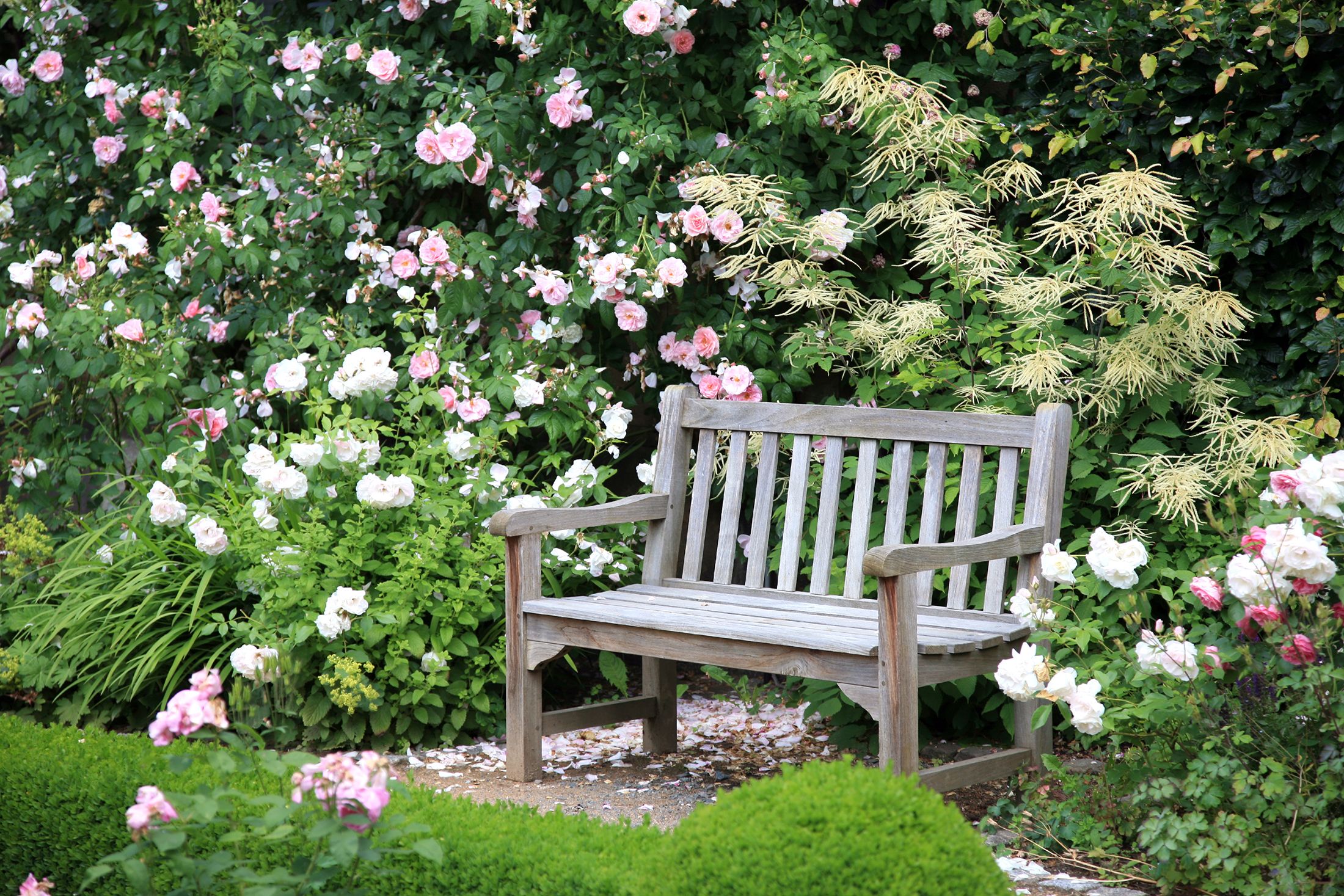
Characteristic Plants
• Abundantly flowering perennials — roses, delphiniums, geraniums (cranesbills), peonies, phlox, lady’s mantle, lavender, catmint, salvias.
• Bulbous plants ensuring early spring bloom — ornamental alliums, tulips, crocuses, daffodils.
• Informal shrubs and climbers — hydrangeas, spireas, climbing roses, clematis, wisteria.
• Ornamental trees with naturally shaped crowns — maples, hornbeams, magnolias, ornamental apple trees.
• Clipped shrubs (topiary) — boxwood or yew, used as structural accents.
• Low or medium-height hedges subtly framing flower beds or shaping separate spaces.
Important: When designing an English garden, plants must be selected responsibly according to hardiness zones and maintenance capacity. Some classic species (such as wisteria or certain rose groups) may require additional care or winter protection.
An English garden is not merely a collection of plants or decorative elements. It is a structured yet softly expressed space where slow living, seasonal change, and the opportunity to discover a different corner each time are at the heart of the experience.