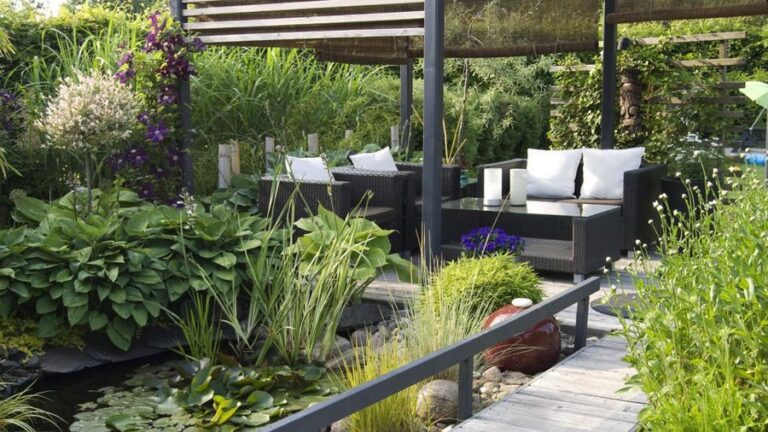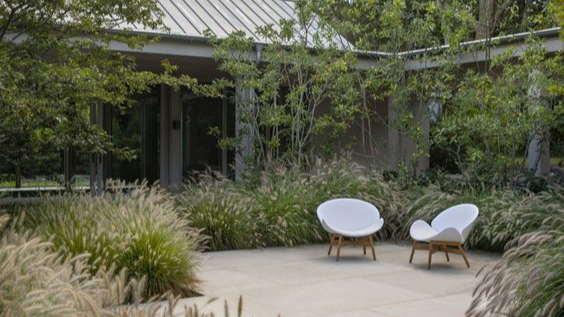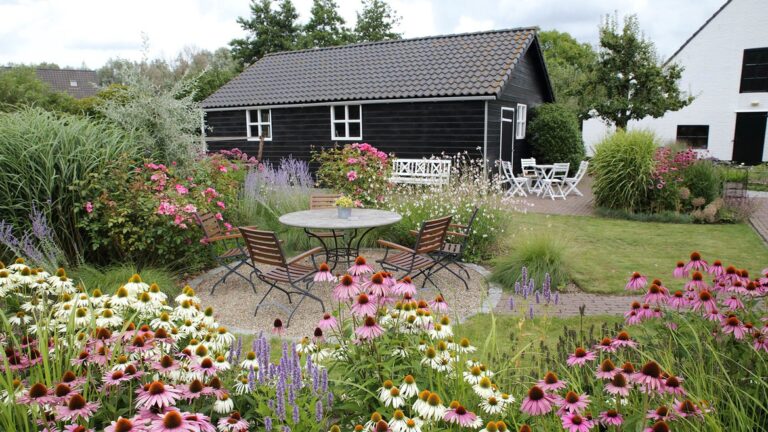

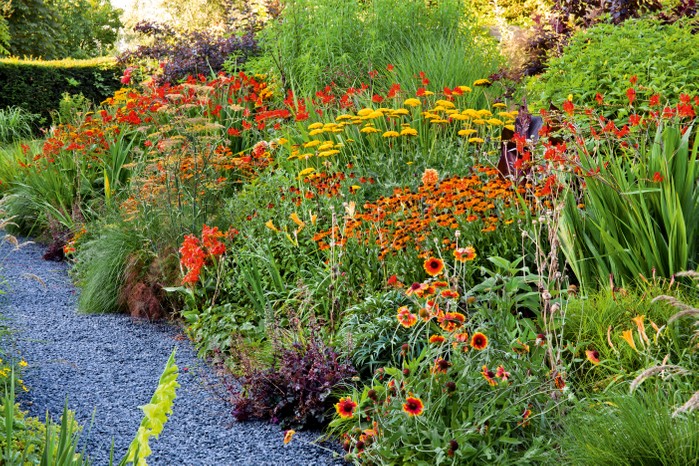
A Dutch garden, often referred to as the “Dutch Wave,” is a naturalistic landscape approach in which plants are composed in large, cohesive drifts. The term “wave” relates to the flowing visual effect created by long sweeps of herbaceous perennials and ornamental grasses. As they mature, they move with the wind, forming a living, ever-changing structure.
This is a restrained yet vibrant style where plant form, texture, and seasonal transformation are paramount. Color is not the primary compositional element. More important is how a plant appears throughout the year and how it integrates into the larger planting mass.
In autumn and winter, faded stems are often left standing. They provide architectural quality and structure, while also serving as food and shelter for birds. For this reason, plants suited to this style are those that not only bloom beautifully but also age gracefully.
It is important to avoid misunderstanding — “low maintenance” does not mean “no maintenance.” Proper plant selection according to soil type, sun exposure, and moisture conditions is fundamental to the success of this style.
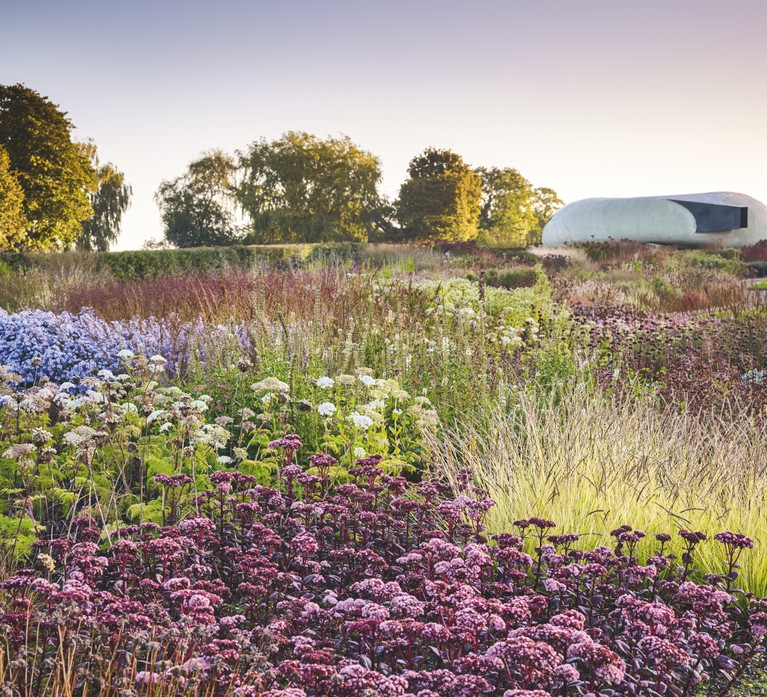
Characteristic Elements
• Wide planting bands with soft, flowing lines.
• Natural surfaces — gravel, crushed stone, grass paths.
• Open, clearly defined planting zones.
• Minimalist or visually “dissolved” small-scale architectural elements.
• Natural transitions in topography without strict terracing.
• Subtle pathways integrated into the landscape.
Insight: A Dutch-style garden reveals its full character in more spacious sites, where broader planting drifts can be established. In smaller areas, proportion is essential to prevent planting masses from overwhelming the sense of space.
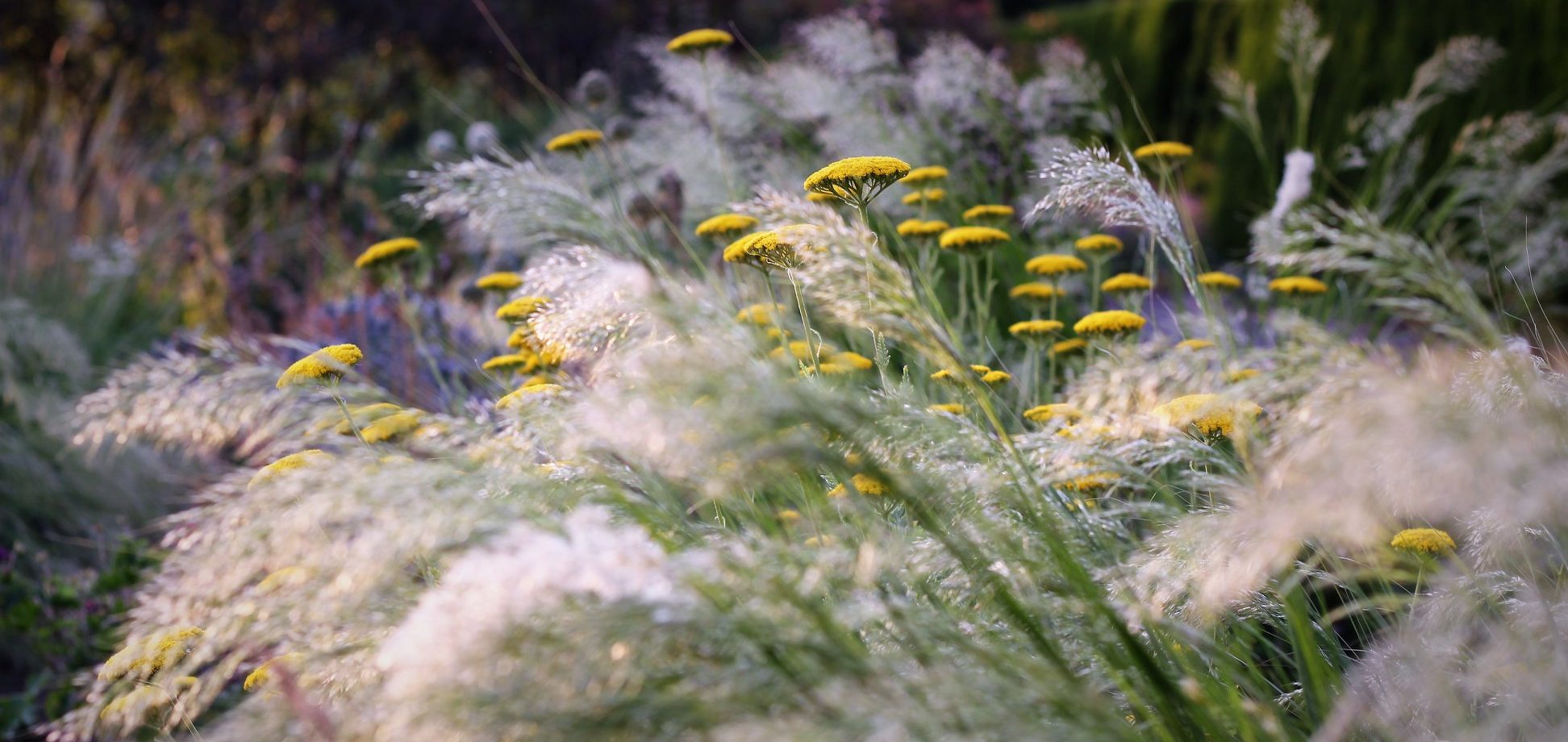
Characteristic Plants
• Ornamental grasses — miscanthus, feather reed grass (Calamagrostis), fountain grass (Pennisetum), sedges (Carex), moor grass (Molinia).
• Strong, structural perennials — coneflowers (Echinacea), yarrow, goldenrod (Solidago), rudbeckia, culver’s root (Veronicastrum).
• Herbaceous plants that retain form for a long time — sedum (Hylotelephium), globe thistle (Echinops), monarda.
• Fine-textured, naturalistic perennials — gaura, catmint (Nepeta), geranium (cranesbill).
A Dutch garden is a composition shaped by the rhythm of the seasons, where plants become the main protagonists. When planting drifts are designed in harmony with site conditions and supported by a clear underlying structure, this “wave” remains balanced and integrates naturally into its surroundings.