
A tropical garden is a dense, multi-layered landscape where foliage form, texture, and lush greenery take center stage. It is most often created in enclosed spaces, where a sheltered and slightly more humid microclimate can be established, allowing for richer planting.
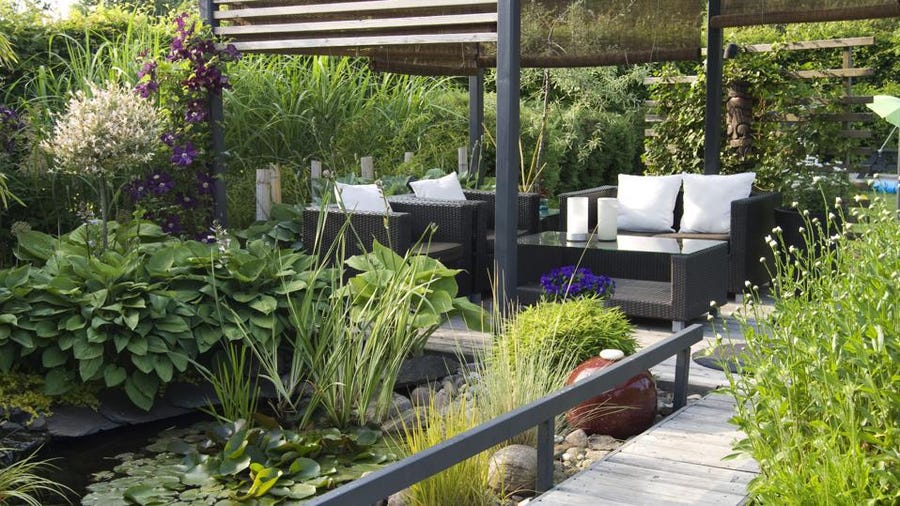
Plants are arranged in layers: horizontal groundcovers, taller masses, vertical accents, and climbers. Water elements are characteristic — ponds, springs, or damp surfaces help create a fresh, vibrant atmosphere. Lawns are often replaced by planting masses or alternative ground surfaces.
This is a garden defined not only by visual impact, but also by sensory experience — the sound of water, the movement of leaves, the contrast between shade and filtered light. However, when creating a tropical-style environment in Lithuanian conditions, interpretation is essential rather than imitation. A true tropical climate does not exist here, so the focus shifts to large-leaved plants, strong textures, and seasonal effect.
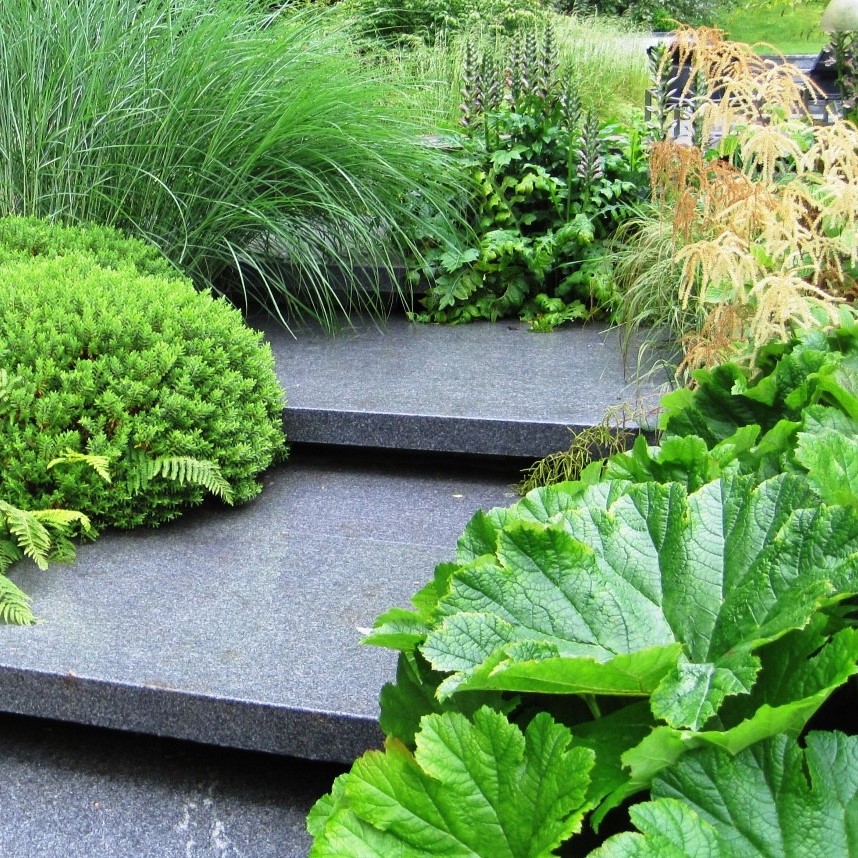
Characteristic Elements
• Ponds or pools.
• Springs, waterfalls, or water walls.
• Bridges or pathways crossing water features.
• Terraces and covered outdoor seating areas.
• Pergolas or gazebos.
• Surfaces of natural stone, wood, or concrete.
• Bold, contrasting accent elements.
Insight: A tropical garden requires a carefully considered microclimate — shelter from wind, warmer locations, and sufficient moisture. In open, exposed sites, the intended effect of this style may be difficult to sustain.
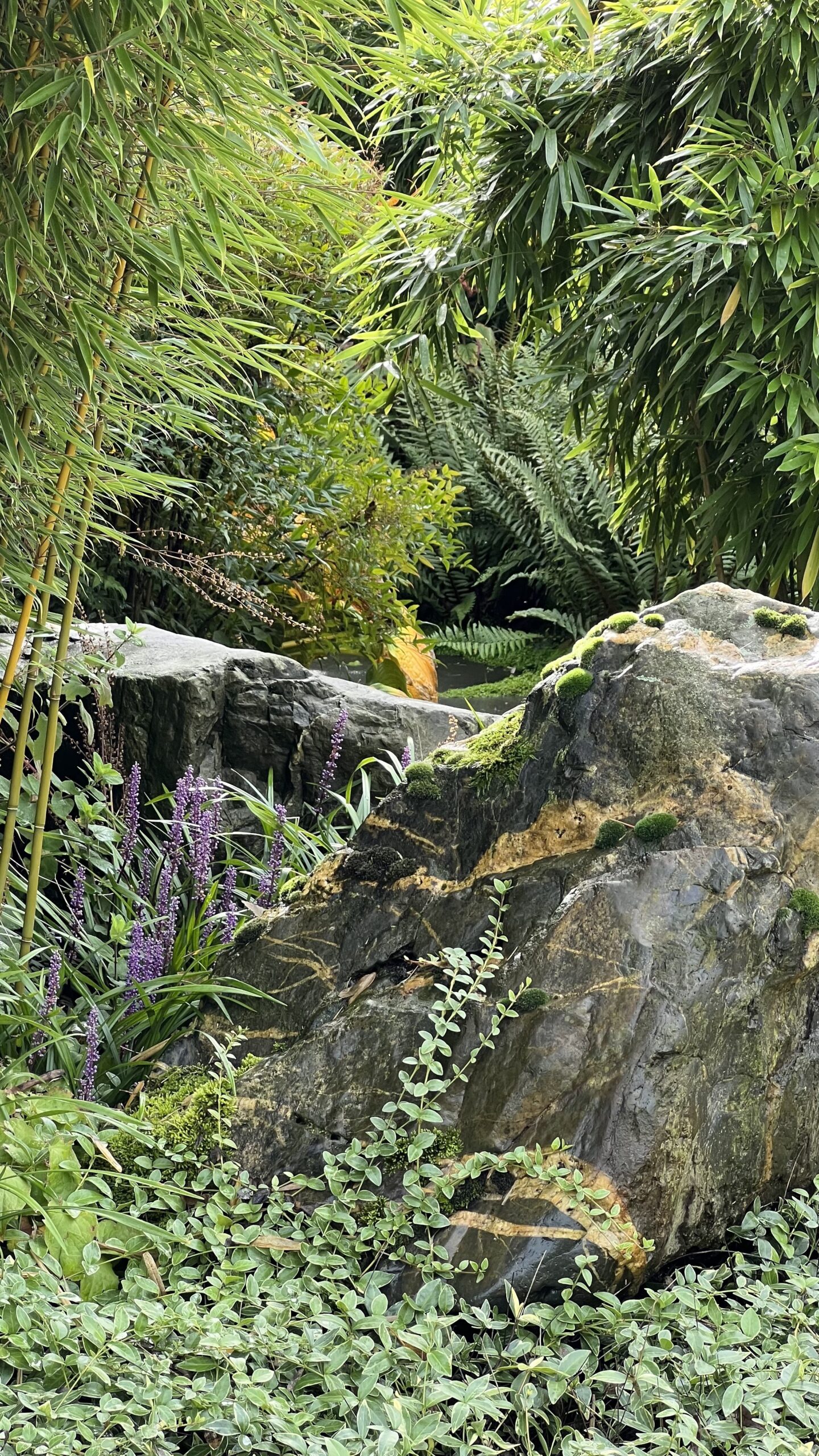
Characteristic Plants
• Lush, large-leaved perennials — hostas, ferns, bergenia, rodgersia.
• Exotic-looking plants — cannas, dahlias, calla lilies (often grown as seasonal plants).
• Tall vertical accents — miscanthus, ornamental millet.
• Climbers — clematis, Virginia creeper, trumpet vine (Campsis).
• Aquatic plants — water lilies, sedges, sweet flag (Acorus), irises.
A tropical garden is a dense and vibrant space defined by layering and the intensity of greenery. Its essence lies not in copying a climate, but in consciously shaping spatial dynamics — through plant composition, textural diversity, and contrast.