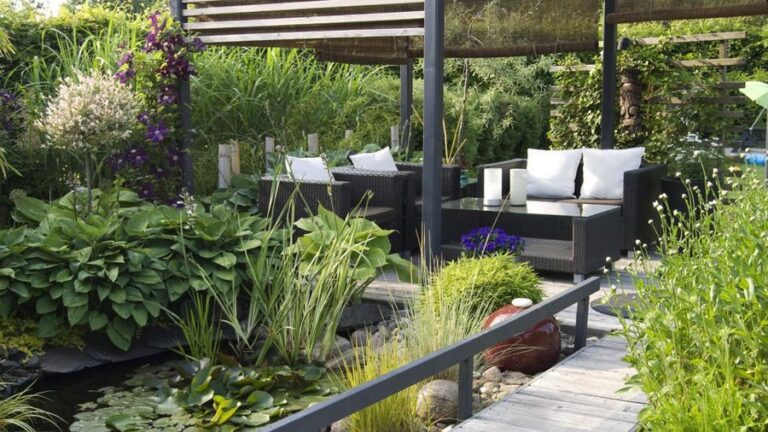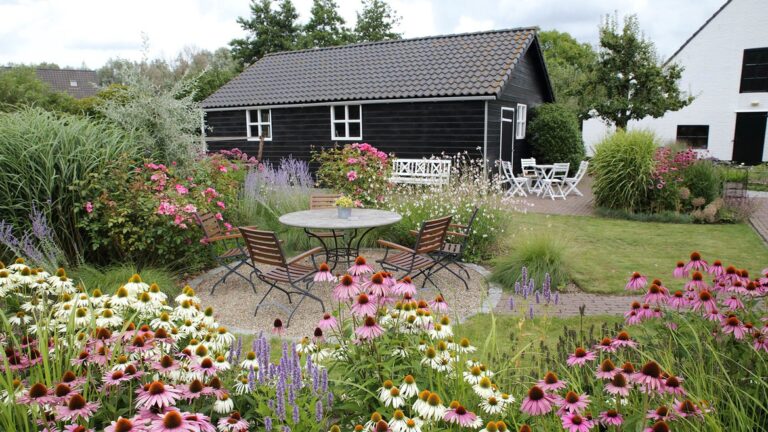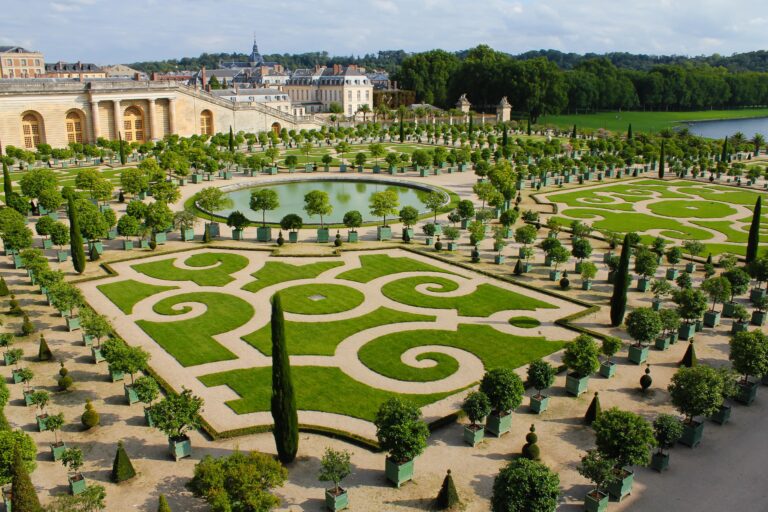

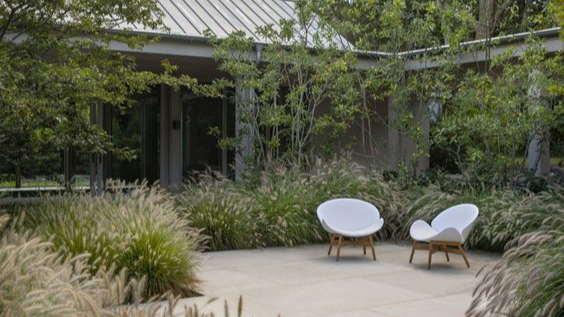
A Scandinavian garden is a harmony of simplicity, functionality, and natural character. It can complement both modern and traditional architecture. Here, the priority is not ornamentation, but ease of everyday use.
This style focuses on outdoor living and low maintenance. Spaces are created clearly, most often in rectangular forms, yet without rigid zoning. Boundaries remain subtle — one area transitions naturally into another. There are few accents, but they are distinct and purposeful.
Typically, this is a small to medium-sized garden where light, openness, and the presence of natural materials are essential. Minimalism here is not cold — it is expressed through wood, texture, and restrained planting compositions.
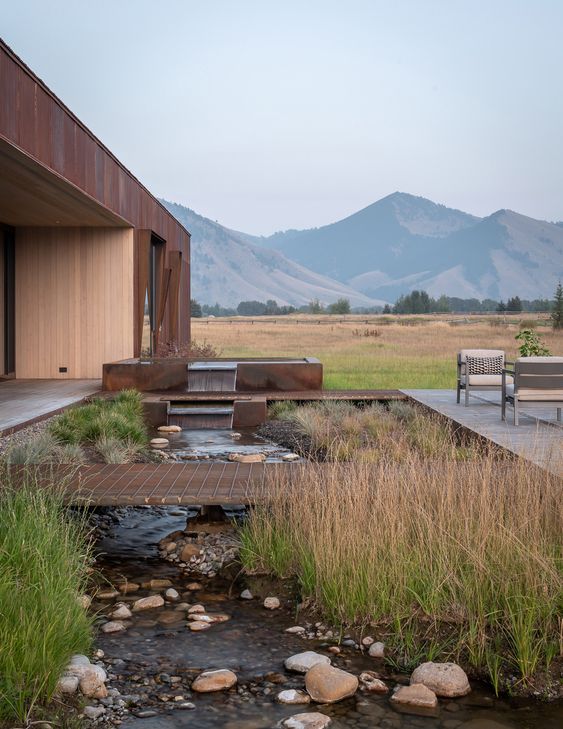
Characteristic Elements
• Wooden or stone terraces.
• Raised beds or a small kitchen garden.
• Modest lawn areas.
• Fragments of natural meadow.
• Clearly shaped outdoor seating areas.
• Minimalist pergolas or shelters.
• A water bowl, small pool, or subtle water feature.
• Simply shaped plant containers.
• Wooden benches or outdoor furniture made of natural materials.
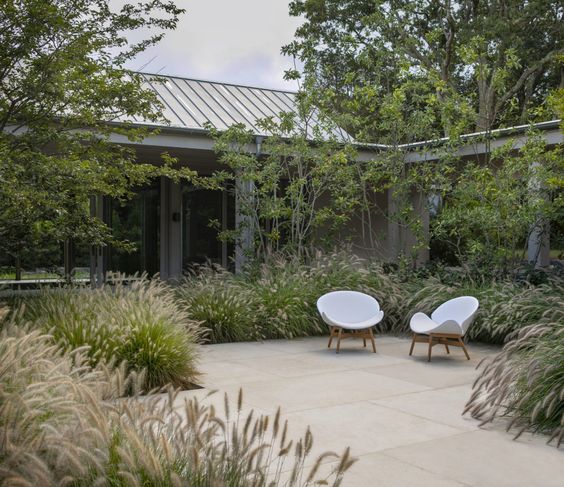
Characteristic Plants
• Ornamental grasses — feather reed grass (Calamagrostis), fountain grass (Pennisetum), sedges (Carex), miscanthus.
• Cold-hardy shrubs — hydrangeas, spireas, dogwoods (Cornus), viburnums.
• Native or naturalized trees — birch, pine, rowan, maple.
• Perennials used in moderation — geranium (cranesbill), salvia, coneflower (Echinacea), catmint (Nepeta).
A Scandinavian garden is a space where simplicity becomes comfort, and structure supports an easy-to-maintain, naturally used environment. Clarity and restraint are central — free of unnecessary accents, yet grounded in thoughtful decisions. Such a setting preserves light and openness while remaining functional throughout all seasons.