
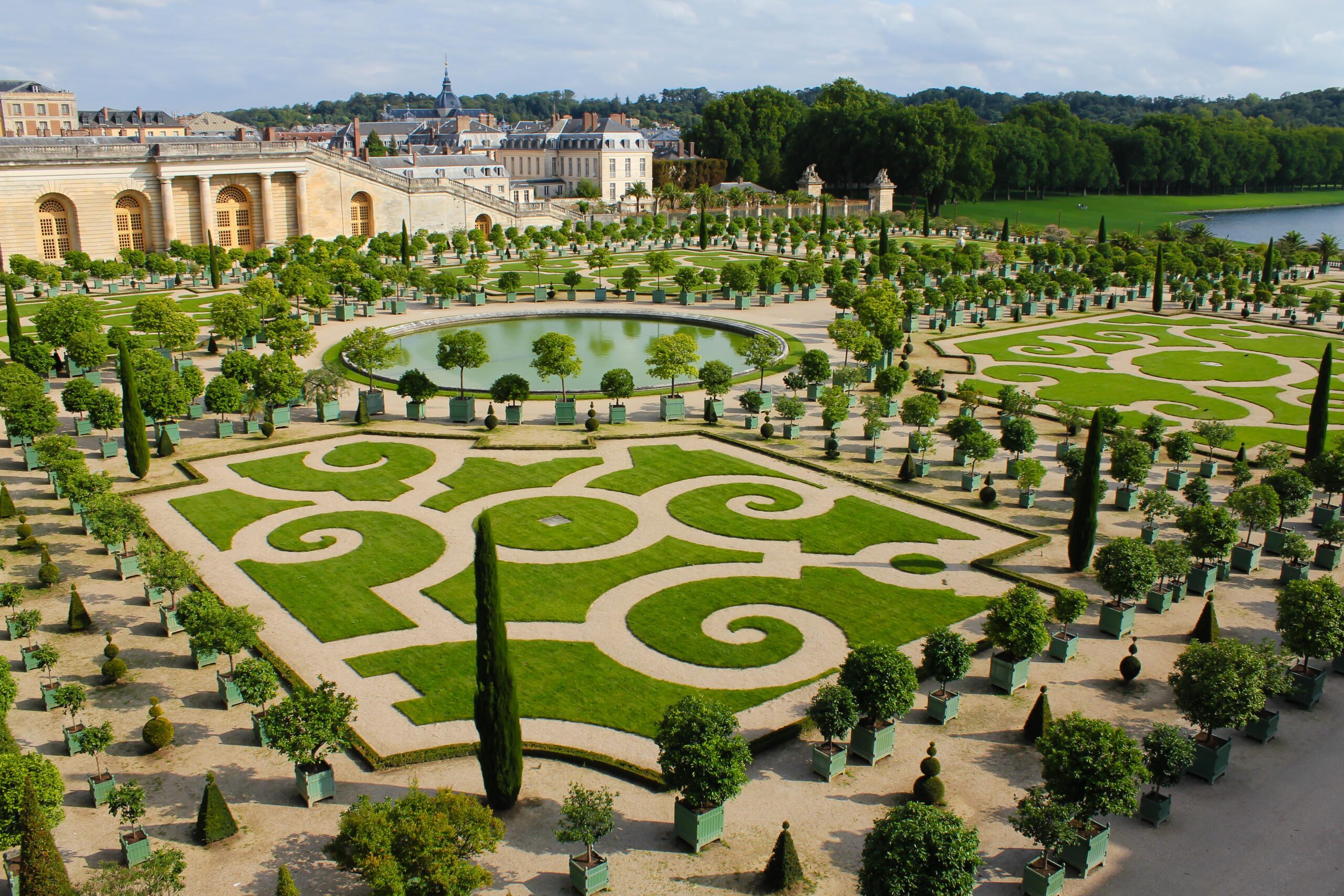
The tradition of the French classical garden dates back to the 17th century and is closely linked to a representational, architectural landscape culture. It is a garden of clear structure, strict symmetry, and precisely planned perspectives, where space is composed as a visual arrangement.
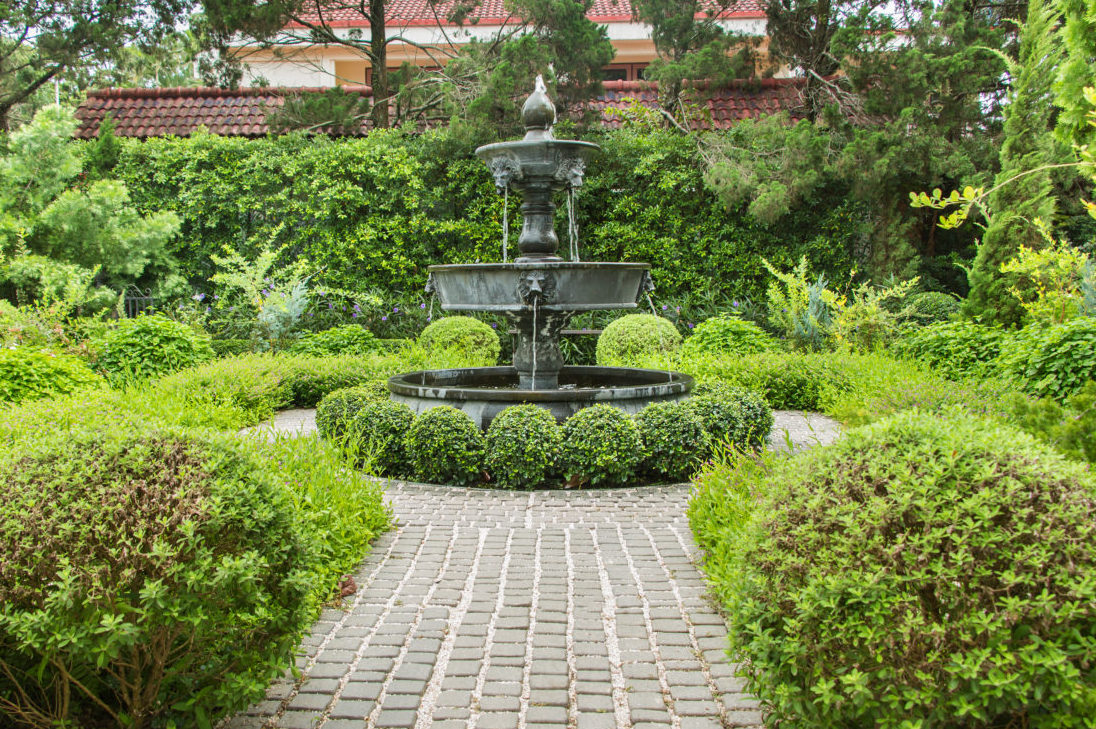
The central axis serves as the primary organizing element — often emphasized by a fountain, sculpture, or reflecting pool. The entire territory is composed so that the eye is guided deliberately, and every element holds a clearly defined place.
This is an ornamental, formal style in which order and control dominate. Plants are not left to grow freely — they are shaped, clipped, and consistently maintained.
The style demands ongoing care and discipline. Strict geometry and symmetry remain effective only when systematically upheld.
Characteristic Elements
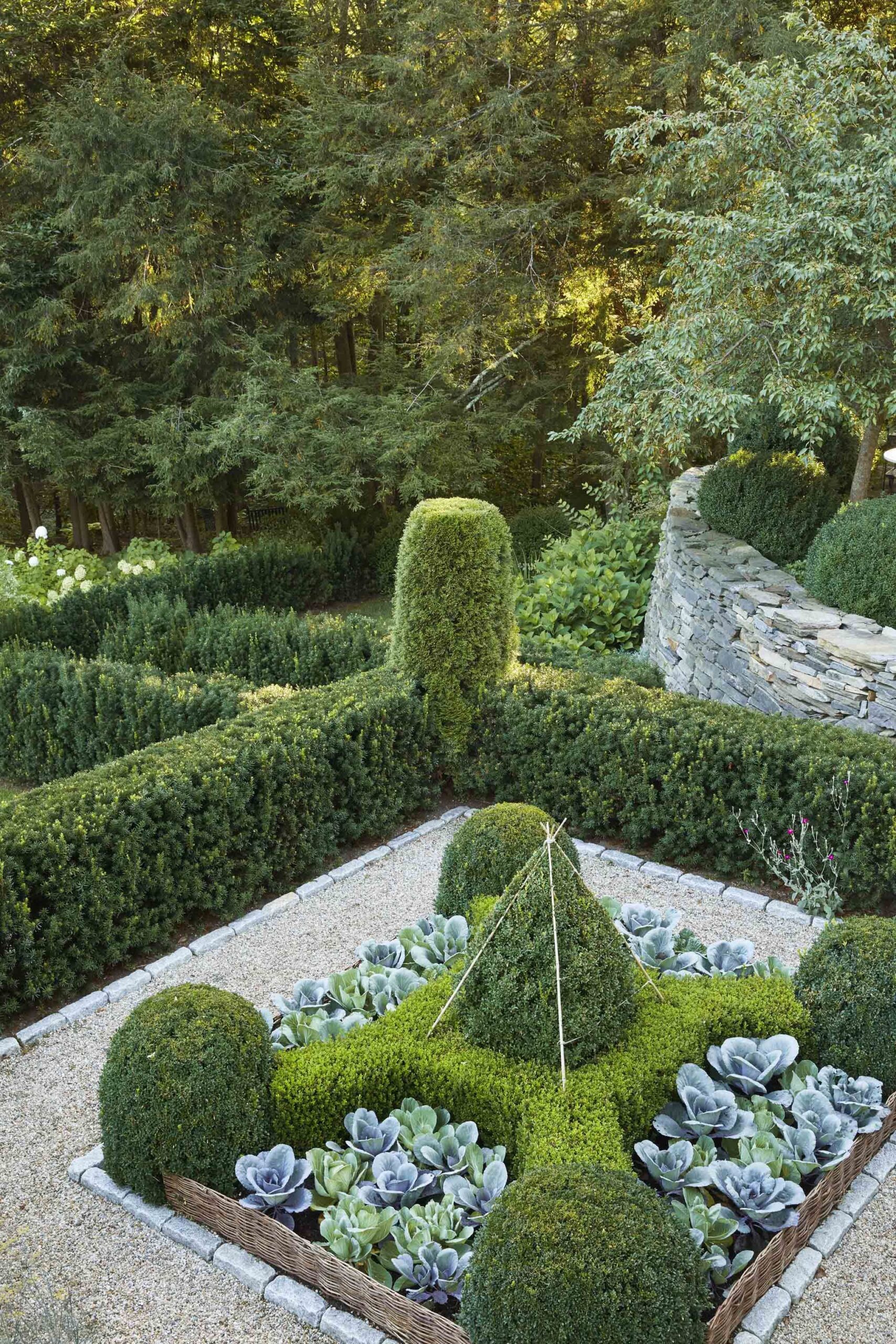
• Strict symmetry and a clearly defined central compositional axis.
• Geometrically shaped parterres.
• Fountains, sculptures, and reflecting pools.
• Clipped hedges and topiary.
• Tree-lined avenues.
• Labyrinths.
• Framing of the space with hedges or decorative fencing.
• Metal pergolas, benches, lanterns, and other ornamental accents.
Insight: A French classical garden reveals its full expression on more spacious sites, where proportion between axes, parterres, and open lawn planes can be maintained. On smaller plots, it is often more appropriate to interpret the style in fragments — preserving the principle of symmetry while avoiding excessive ornamentation.
Characteristic Plants
• Shaped hedges — hornbeam, beech, privet, yew.
• Topiary and clipped shrubs — boxwood, yew, arborvitae (thuja), formed into spheres, cones, or columns.
• Trees for avenues — linden (lime trees), chestnut.
• Low plants for parterres and borders — lavender, boxwood edging.
• Accent trees or shrubs along central axes — magnolias, ornamental apple trees, hydrangeas.
• Seasonal flowers for decorative parterres — pansies, begonias, pelargoniums.
• Perennials reinforcing structure — irises, peonies, delphiniums, phlox.
A French classical garden is a dialogue between architecture and landscape, defined by order, proportion, and a clearly articulated compositional idea. Only consistent maintenance ensures that such a garden retains its representational character and sharply defined forms.