
A Japanese garden is not a decorative composition, but a carefully considered spatial philosophy. Every detail carries weight, and every element has its place. Stone, water, plants, and emptiness function as a unified system in which balance, rhythm, and the relationship between fullness and silence are essential.
Plant diversity is often intentionally limited. Far more important are form, silhouette, shadow, and seasonal change. This is a space that does not display abundance, but invites contemplation. The aesthetic of a Japanese garden is rooted in the principles of wabi-sabi — beauty in imperfection — and yohaku-no-bi — the beauty of empty space.
Such a garden is not designed for active use or large gatherings. It is a place for slow presence, where tranquility, balance, and the restrained spirit of Zen tradition are central.
An authentic Japanese garden is not merely a collection of exotic plants or decorative attributes. It is a clear compositional system in which even empty space is consciously planned.
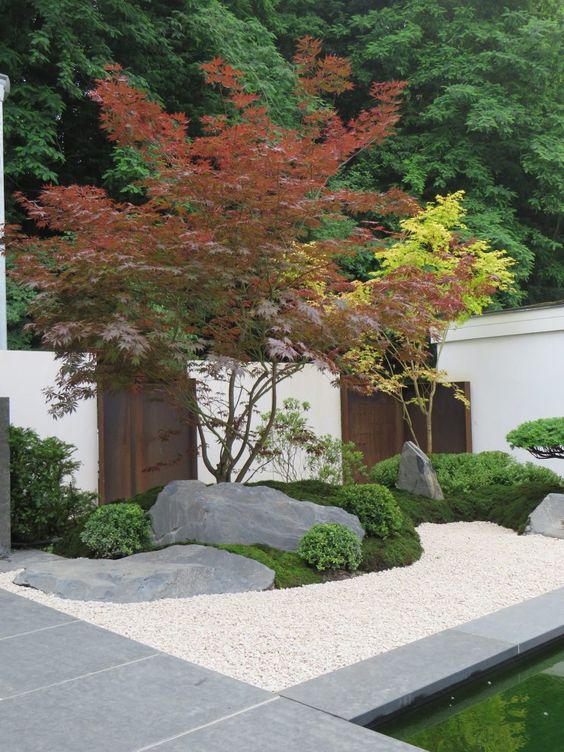
Characteristic Elements
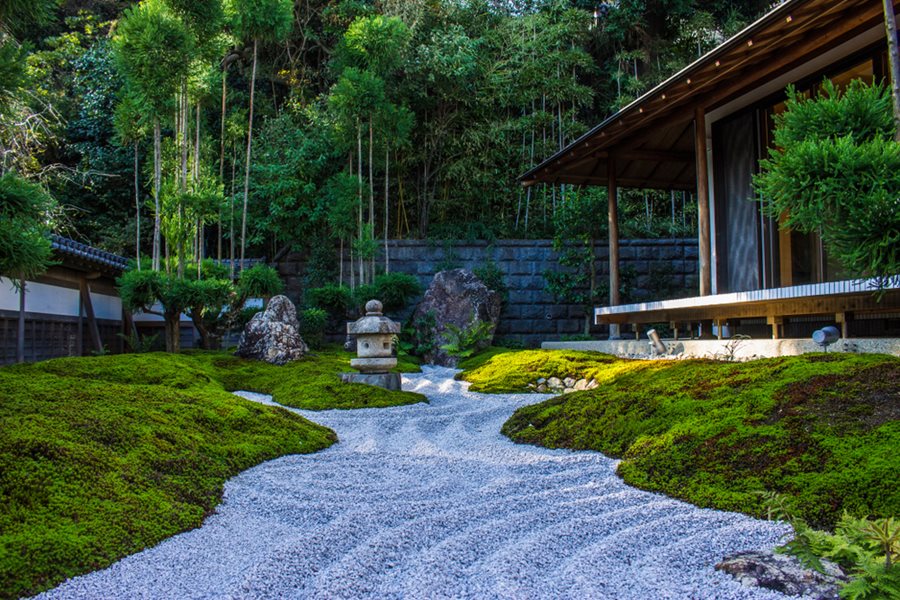
• Stone compositions and dry garden principles (karesansui), where gravel or crushed stone symbolizes water.
• Water elements — springs, tsukubai basins, ponds with koi carp (nishikigoi).
• A tea house (chashitsu) or symbolic gates (torii), used as accent elements.
• Natural materials — stone, wood, gravel.
• Limited, carefully shaped lawns or their deliberate omission.
Insight: On a small plot, it is often more appropriate to create an interpretation of a Japanese garden rather than a literal stylistic replica. Excessive use of symbolic elements can result in an artificial impression.
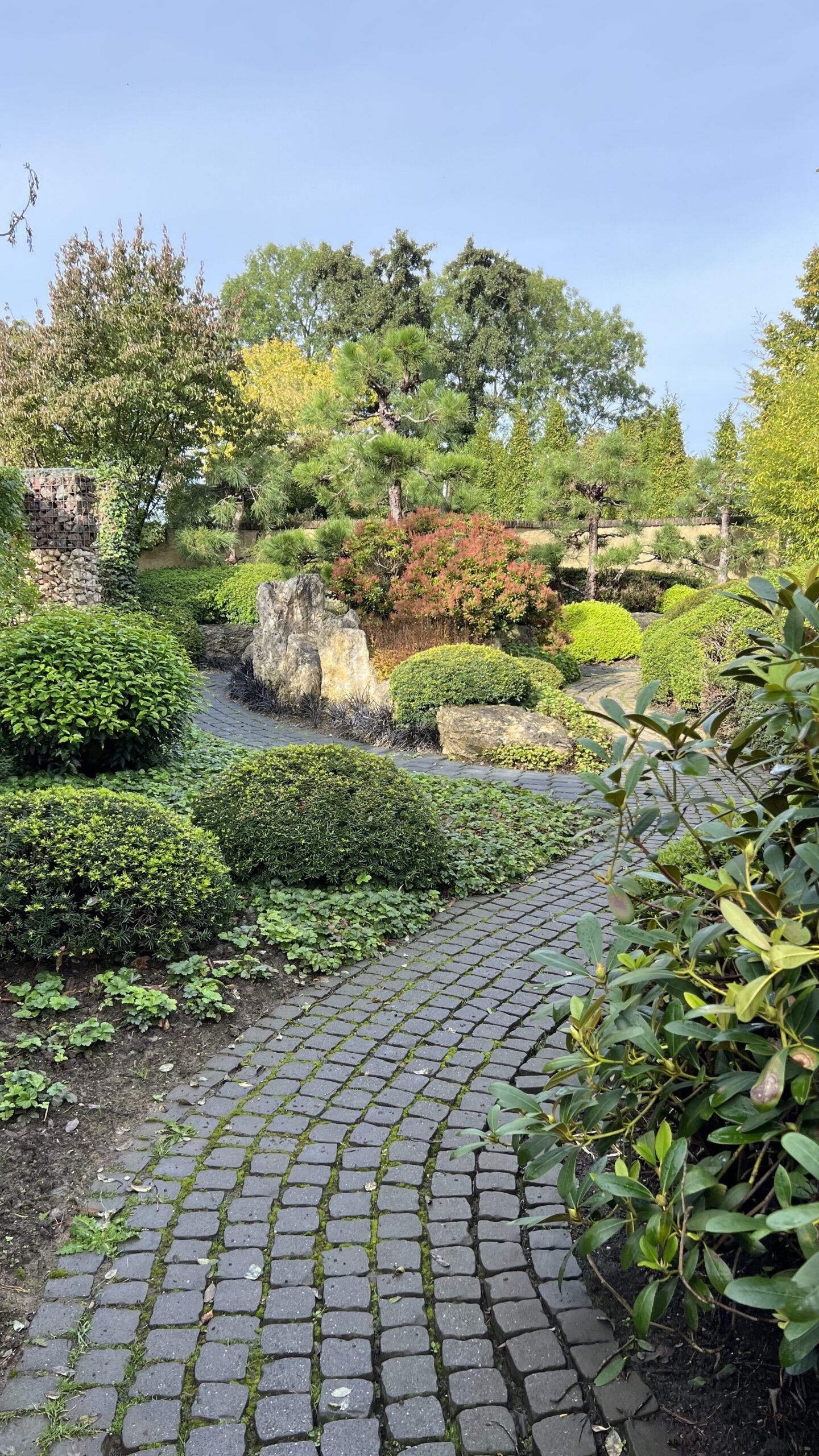
Characteristic Plants
• Carefully shaped trees and shrubs following the niwaki principle — pines, maples, yews.
• Ornamental Japanese maples (selecting hardy cultivars suitable for the local climate).
• Azaleas and rhododendrons, providing seasonal color accents.
• Moss or low groundcover plants that create a moss-like effect.
• Ornamental grasses that introduce subtle movement.
A Japanese garden is an experience of restraint and quiet, born from clear structure and carefully balanced details. When form, material, and emptiness work in harmony, the space retains its authentic spirit and becomes a natural extension of the surrounding landscape.